
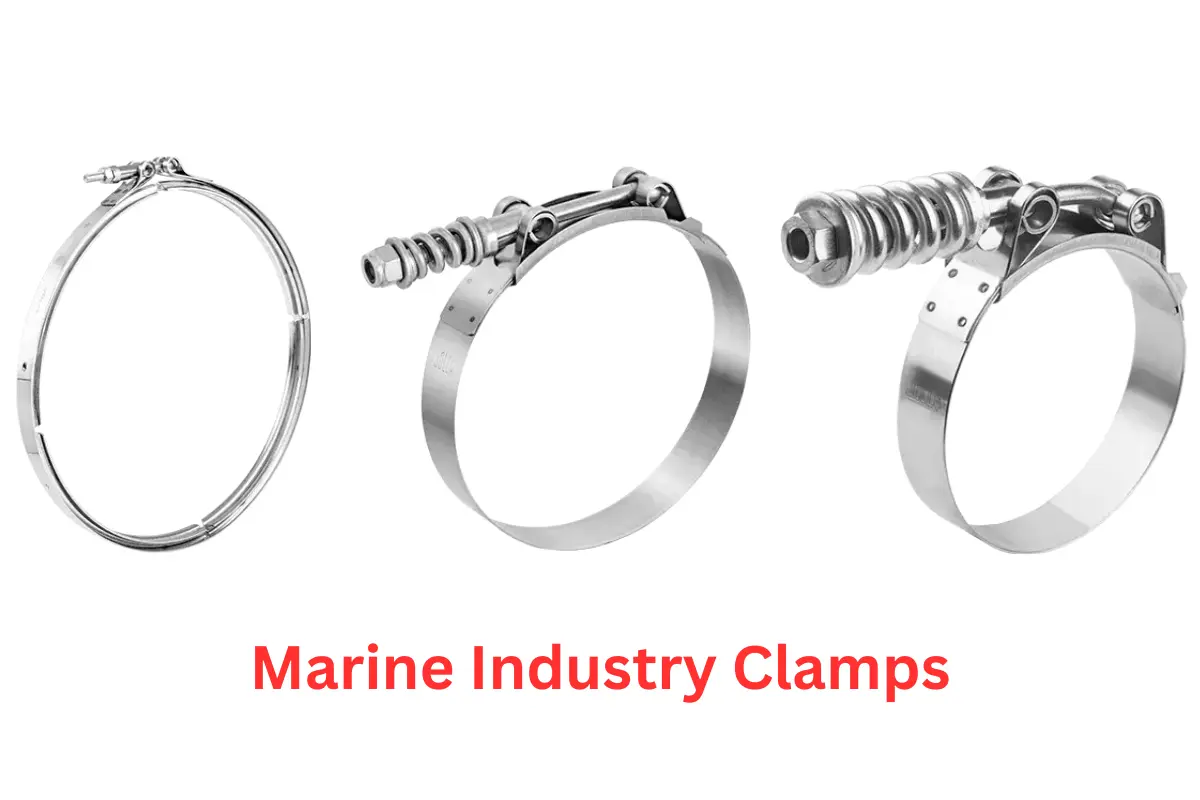
Marine environments pose unique challenges for vessel operators, engineers, and maintenance teams, particularly concerning clamps used onboard. This guide outlines common issues and practical solutions using marine-grade clamps, enhancing operational reliability and safety.
Common clamping challenges in marine environments
Marine vessels operate under demanding conditions, which often result in:
- Corrosion and Rust
- Saltwater exposure accelerates corrosion, compromising clamp integrity.
- Standard clamps often degrade rapidly, causing system failures and safety hazards.
- Frequent Leaks
- High-pressure fluid lines require robust sealing, but conventional clamps may loosen due to vibration and pressure fluctuations, leading to leaks.
- Leaks not only disrupt operations but also increase environmental risks.
- Vibration and Loosening
- Constant vibrations from engines, machinery, and harsh sea conditions cause clamps to loosen, requiring frequent tightening and maintenance.
- This increases downtime and operational costs significantly.
- Temperature Extremes
- Clamps must withstand wide temperature variations, from freezing to extremely hot engine compartments, potentially compromising their structural integrity.
Solutions with Marine-Grade Clamps
To address these challenges effectively, selecting appropriate marine-grade clamps is essential.
1. Corrosion-Resistant Materials
- Challenge: Standard metal clamps corrode rapidly.
- Solution: Use marine-grade stainless steel (AISI 316), which offers excellent corrosion resistance, significantly extending clamp life.
- Benefit: Reduces maintenance frequency, lowers replacement costs, and increases reliability.
2. Constant Tension and Spring-Loaded Clamps
- Challenge: Frequent leaks due to pressure fluctuations and thermal expansion.
- Solution: Implement constant tension or spring-loaded clamps that maintain consistent pressure despite hose expansions or contractions.
- Benefit: Ensures leak-proof connections, reduces environmental risks, and enhances system reliability.
3. Vibration-Resistant Design
- Challenge: Clamps loosening under continuous vibrations.
- Solution: Select clamps designed with vibration-resistant features, including locking nuts and floating bridge mechanisms.
- Benefit: Maintains secure fastening, reduces frequent maintenance, and increases vessel uptime.
4. High-Temperature Capability
- Challenge: Clamp degradation under temperature extremes.
- Solution: Opt for high-temperature-rated marine clamps capable of performing reliably from sub-zero conditions to engine compartments exceeding 250°F (121°C).
- Benefit: Ensures clamp integrity and performance consistency, reducing operational disruptions.
Practical Applications and Recommended Clamp Types
- Fuel Lines: Mini clip & worm drive clamps are used in case of small fuel lines & light duty hydraulic mechanisms.
- Exhaust and Turbocharger Systems: Stainless steel V-band clamps for high-temperature and vibration resistance.
- Cooling Systems: Constant tension clamps to accommodate thermal expansions and contractions.
- Electrical and Cabling Systems: P-clips and customized clamps designed specifically for secure, corrosion-free attachment.
Key Benefits of Upgrading to Marine-Grade Clamps
- Enhanced Operational Efficiency: Reduced downtime and lower maintenance costs.
- Improved Safety: Minimized risk of leaks, environmental hazards, and equipment failure.
- Long-Term Cost Savings: Higher upfront cost offset by significantly longer lifespan and reduced operational interruptions.
Selecting the Right Clamp Manufacturer
Choosing a trusted clamp manufacturer, such as Jolly Clamps, ensures access to:
- Industry Compliance: Marine clamps adhering to global standards (SAE, DIN, etc.).
- Customization Capabilities: Solutions tailored specifically to your vessel’s operational requirements.
- Proven Track Record: Decades of expertise in manufacturing robust, marine-specific clamp solutions.
Conclusion
Adopting innovative marine-grade clamps addresses and resolves common maritime operational challenges, significantly enhancing vessel reliability, safety, and operational efficiency. Investing in high-quality, specialized clamping solutions ensures that your marine operations run smoothly, safely, and cost-effectively.
Next Steps
Interested in learning more about optimizing your marine clamping solutions? Reach out to our expert team for a detailed consultation tailored to your specific maritime applications.
