
Introduction
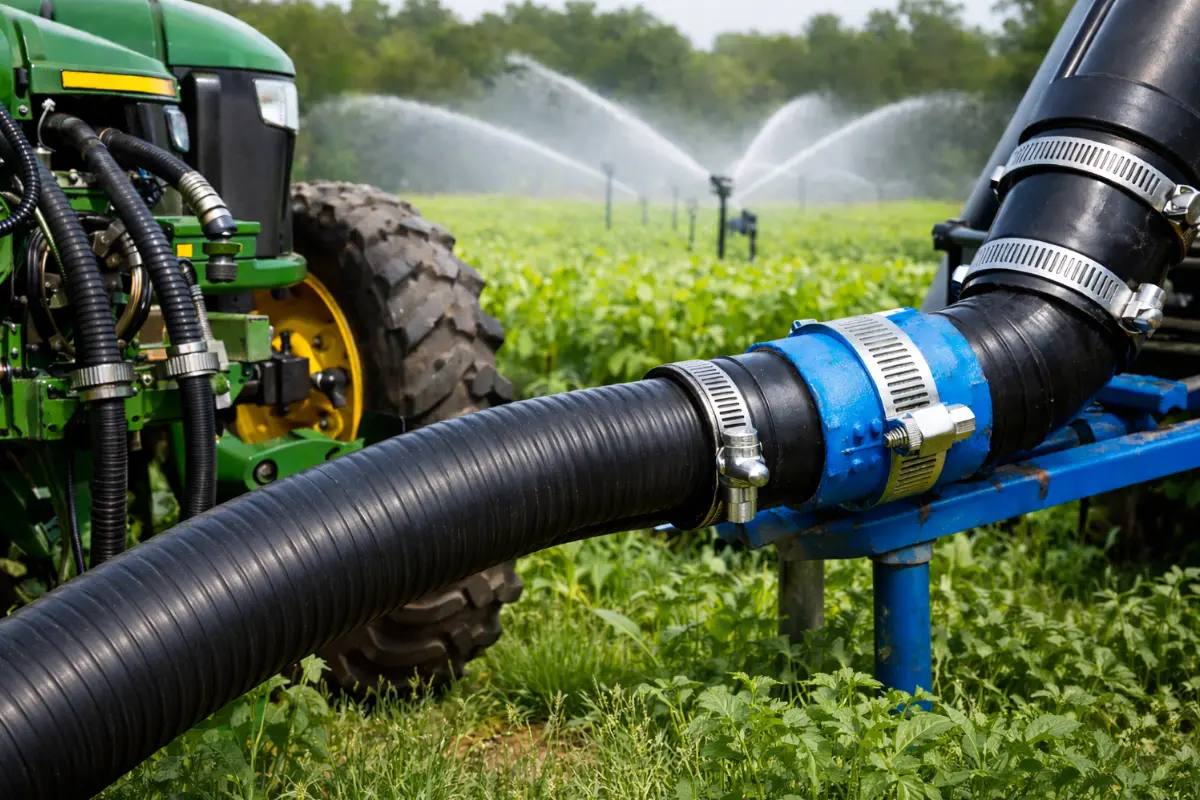
Agricultural and irrigation systems depend on reliable fluid connections. Clamps secure hoses and tubing that deliver water, fuel, and hydraulic fluid across machinery and field systems. Selecting the correct clamp type impacts system efficiency, maintenance costs, and operational downtime. Understanding clamp requirements in agricultural applications ensures reliable system performance.
Environmental Exposure in Agriculture
Agricultural environments pose unique corrosion challenges because of the combination of soil particles, fertilizer residue, and moisture. Irrigation systems expose clamps to UV radiation. Equipment operates in temperatures ranging from -10°C to over 50°C. Clamps must resist salt in some soil compositions and chemical exposure from agricultural treatments. Stainless steel clamps outperform carbon steel alternatives in these conditions, resisting corrosion from fertilizer chemicals and prolonged moisture exposure. Grade 316 stainless steel provides enhanced resistance to chloride-rich soils found in coastal agricultural regions.
Water Delivery Systems
Irrigation requires secure hose connections to prevent water loss and system pressure drops. Clamps hold hoses connecting pumps to distribution lines and lateral pipes. Water pressure in irrigation systems ranges from 2 to 8 bar, requiring clamps with sufficient clamping force. Over-tightening damages hoses, reducing their lifespan. Under-tightening causes leaks and pressure loss. V-band clamps distribute pressure evenly, preventing hose damage from point loading. Stainless steel construction withstands constant water exposure without rust formation that could weaken the clamp or contaminate water quality.
Fuel and Hydraulic Systems
Tractors and farm machinery use fuel and hydraulic systems for operation. Clamps secure fuel lines connecting tanks to engines. Hydraulic lines transmit power for implements like plows, harvesters, and loaders. These systems operate under varying pressure conditions. Fuel systems require clamps that resist petroleum exposure. Hydraulic systems operate at pressures up to 20 bar on some machinery. Carbon steel clamps with zinc plating provide cost-effective protection in fuel systems. Stainless steel clamps are preferred for hydraulic applications where pressure is higher and moisture exposure is constant.
Vibration and Shock Loading
Agricultural machinery operates on uneven terrain, causing vibration and shock loads. Engines transmit vibration throughout the machine frame. Clamps must maintain clamping force under these conditions without loosening. Work-hardened stainless steel clamps resist vibration-induced loosening better than standard materials. The mechanical advantage of V-band clamps provides stable clamping force under vibration. Worm-drive clamps allow fine adjustment but require periodic re-tightening in high-vibration applications.
Seasonal Storage and Maintenance
Agricultural equipment operates seasonally in many regions. During off-season storage, machinery faces temperature swings and humidity changes. Clamps corrode if made from unprotected steel. Stainless steel clamps require no additional protection during storage. Galvanized or nickel-plated clamps may develop white corrosion if not properly maintained. Equipment that sits for months benefits from stainless steel construction that eliminates seasonal maintenance requirements.
Cost Considerations
Initial clamp cost must be balanced against maintenance and replacement frequency. Zinc-plated carbon steel clamps cost 30-50% less than stainless steel but may require replacement every 3-5 years in harsh environments. Stainless steel clamps cost more initially but last 10+ years with minimal maintenance. For equipment used continuously in high-moisture environments, stainless steel provides better total cost of ownership. For seasonal applications with lower exposure, zinc-plated clamps offer adequate protection at lower cost.
Selection Guidelines
Choose stainless steel clamps for irrigation systems and equipment exposed to constant water contact. Use zinc-plated carbon steel clamps for fuel and hydraulic systems in lower-moisture environments. Select V-band clamps for pressure systems requiring consistent clamping force. Use worm-drive clamps for applications requiring easy adjustment and frequent access.
Conclusion
Selecting the right clamp for agricultural and irrigation systems requires evaluating environmental exposure, operating pressure, vibration levels, and maintenance requirements. Stainless steel clamps provide durability in harsh conditions, while zinc-plated alternatives offer cost-effective solutions for controlled environments. Proper clamp selection reduces system downtime and maintenance costs across agricultural operations.
